FromSoftware’s leap into open-world design is nothing short of triumphant. After a decade of refining the “Souls” formula through Demon’s Souls, the Dark Souls trilogy, Bloodborne and Sekiro, director Hidetaka Miyazaki and his team finally took their style of exploration and combat into a vast, seamless landscape — with worldbuilding contributions from George R.R. Martin, author of A Song of Ice and Fire. The result is a game that feels both like a natural evolution and a quiet revolution. The Lands Between stretches before you with a freedom the studio’s previous games never offered, yet every corner feels hand-crafted and deliberate. Legacy dungeons hide brutal bosses, while catacombs reward curious explorers with gear that reshapes entire builds.
The Lands Between Is a World That Begs to Be Explored
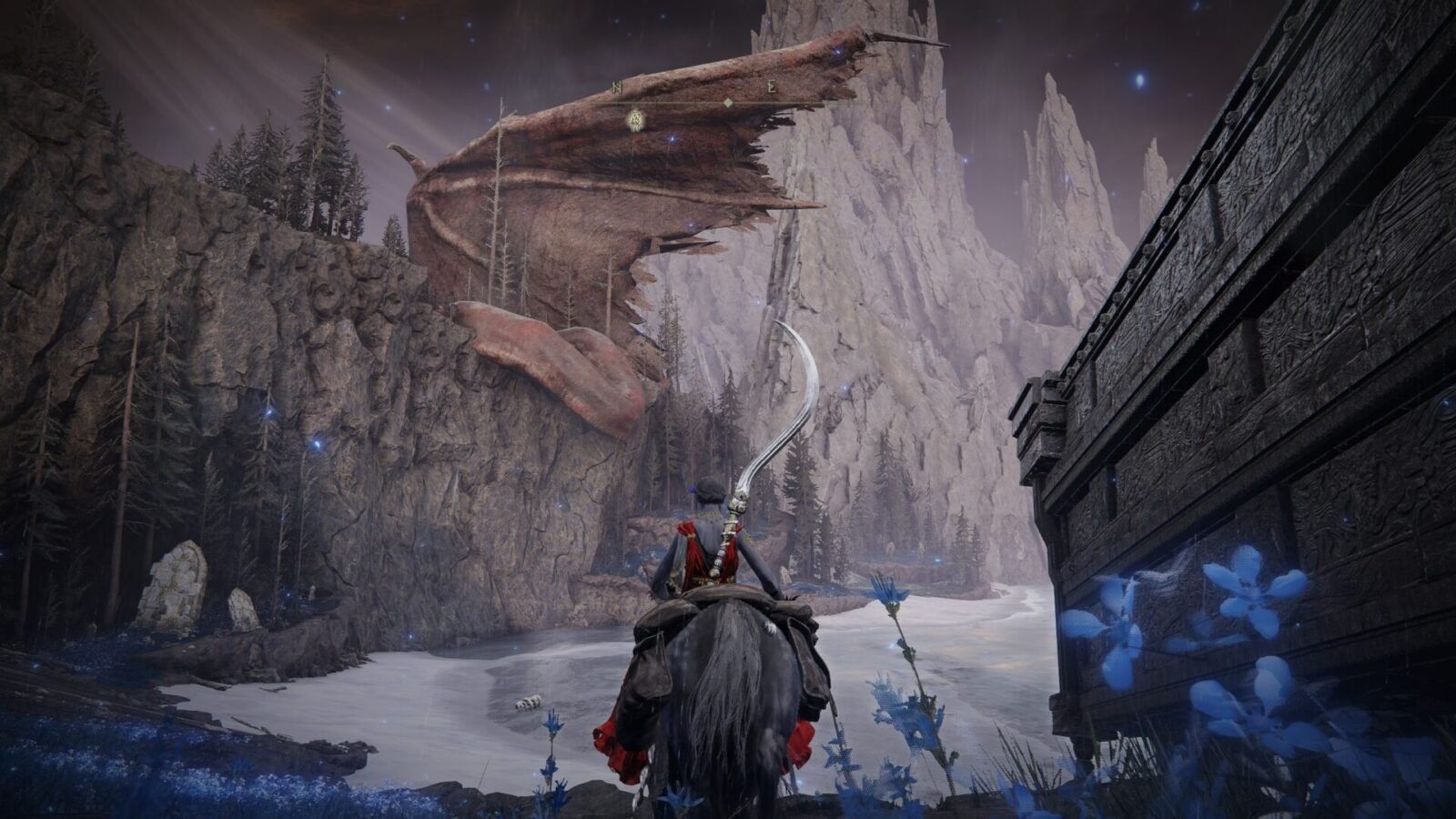
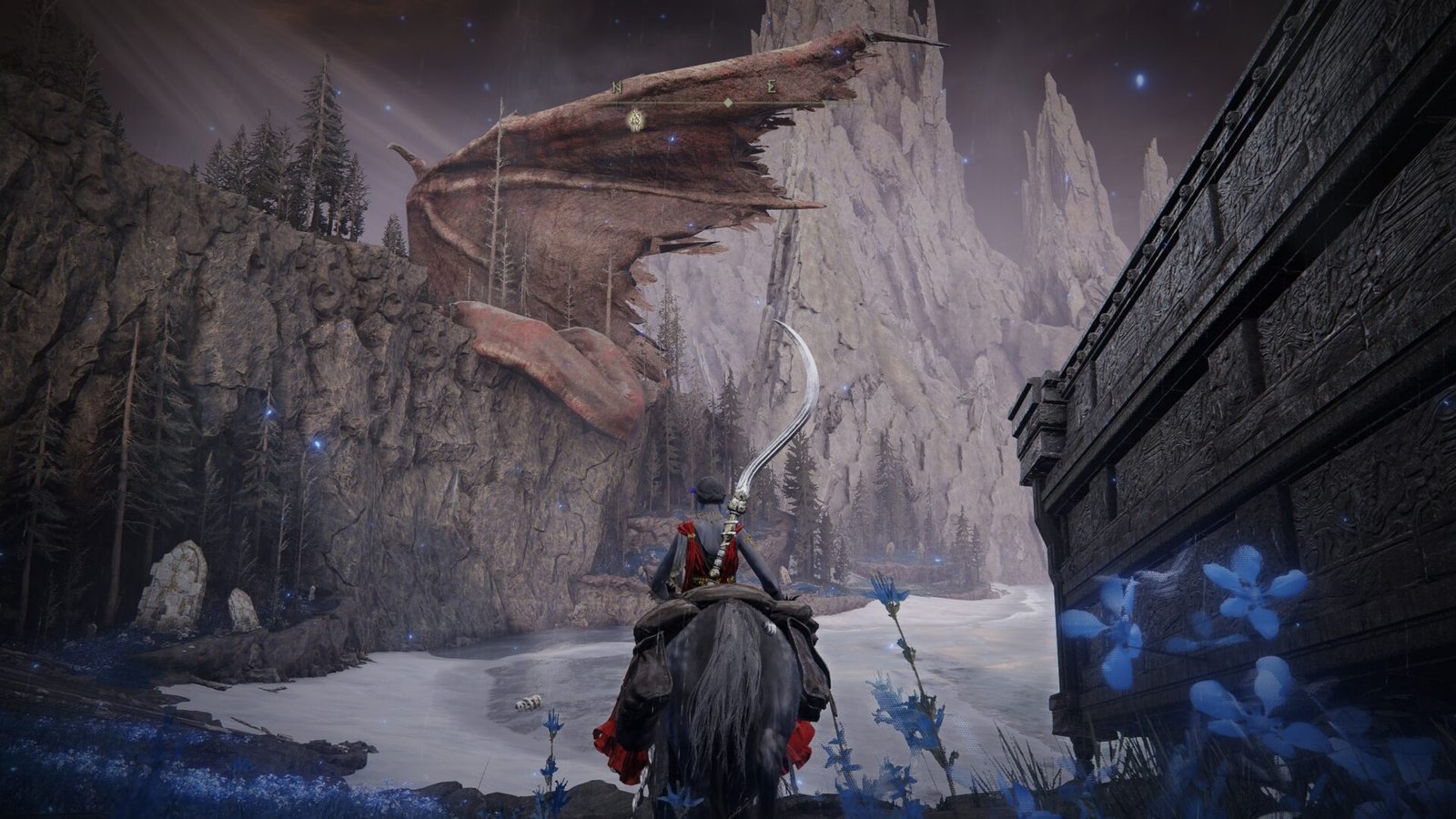
You play as a Tarnished, an exile called back to the Lands Between after the shattering of the Elden Ring and the war between the demigod children of Queen Marika that followed. Your goal — become Elden Lord — is simple. The journey is anything but. From the moment you step out of the opening cave into the golden fields of Limgrave, with the colossal Erdtree glowing on the horizon, the game makes one promise and keeps it for a hundred hours or more: if you can see it, you can go there.
The map is a masterclass in variety. Limgrave’s green hills give way to the misty lakes of Liurnia, the rot-scarred hellscape of Caelid, the windswept Altus Plateau and the gleaming streets of Leyndell, the Royal Capital. Each region has its own weather, colour palette, enemies and mood, and each is dense with things to find — caves, mines, catacombs, evergaols, wandering bosses and hidden paths that loop back on themselves in ways that constantly surprise. Crucially, almost none of it is signposted. There are no quest markers cluttering the screen and no checklist of icons to clear. Discovery here is personal, and that makes every find feel earned.
Combat — Familiar, Yet More Flexible Than Ever
Combat remains the soul of the experience — weighty, precise, and unforgiving in the best way. Every swing of a sword, cast of a spell or roll through an attack is a commitment, and reading an enemy’s movements matters far more than raw statistics. Veterans will feel at home immediately, but Elden Ring adds meaningful new layers. Jumping attacks and guard counters open up enemy posture in a system reminiscent of Sekiro, rewarding aggression instead of pure patience. Mounted combat on your spectral steed, Torrent, turns open-field encounters into galloping duels against dragons and cavalry.
The biggest addition is Spirit Ashes — summonable allies that range from a pack of wolves to a perfect copy of your own character. Purists can ignore them entirely, but for everyone else they are a graceful difficulty dial: help is there when a boss wall feels insurmountable, without the game ever forcing it on you. Combined with the ability to simply leave a hard fight, explore somewhere else and come back stronger, Elden Ring is easily FromSoftware’s most approachable game — without ever becoming easy.
Legacy Dungeons and Bosses at Their Peak
Scattered through the open world are the legacy dungeons — large, self-contained areas built in the classic Souls style. Stormveil Castle, Raya Lucaria Academy and Leyndell itself are among the finest levels the studio has ever made: labyrinthine, vertical, packed with shortcuts and secrets, and crowned with unforgettable boss fights. The boss roster is enormous, from the tragic grandeur of Starscourge Radahn — fought as a festival of warriors charging across a desert — to Malenia, Blade of Miquella, an optional encounter in the late-game Haligtree that has rightly become legend as one of the toughest and most beautiful fights in gaming. Not every minor dungeon boss reaches those heights, and a handful of repeat encounters in the smaller caves are the game’s one real blemish. But the peaks here are so high that the occasional recycled mini-boss is easy to forgive.
Builds and Progression
With ten starting classes, hundreds of weapons, and an enormous library of spells, incantations and Ashes of War — swappable special skills that can change a weapon’s ability and scaling — Elden Ring offers more build freedom than any of its predecessors. Want a samurai who bleeds dragons with a katana, a gravity-magic knight, or a bare-chested prophet hurling lightning? All are viable. Respeccing is generously available after the early game, which encourages experimentation instead of punishing it. Smithing stones and upgrade materials keep gear relevant deep into the journey, and the sheer volume of viable playstyles gives the game enormous replay value.
Visuals, Sound and Performance
Elden Ring is not the most technically advanced-looking game of its generation, but its art direction is unmatched. Every vista is composed like a painting — golden light breaking over ruined castles, blood-red skies above Caelid, underground cities glittering beneath a false starry sky. The original score swells from lonely strings in the open world to thunderous choirs in boss arenas, and the sound design gives every weapon a satisfying sense of weight. Performance has improved steadily since launch through patches; on current consoles and a decent PC the experience is smooth in the ways that matter, though the very largest set-piece fights can still test older hardware.
And the journey does not end with the base game. The Shadow of the Erdtree expansion, released in June 2024, adds a whole shadow realm of new lands, weapons and some of the hardest bosses FromSoftware has ever designed — a generous second helping that many players rate alongside the main adventure.
Online Play — Ghosts, Messages and Summons
Elden Ring carries forward the series’ unique asynchronous multiplayer. As you explore, you will see the ghostly outlines of other players living their own adventures, bloodstains that replay the final moments of someone who died where you stand, and messages scrawled on the ground in the game’s deliberately limited vocabulary — equal parts helpful warning, comedy gold and cheerful deception. When a fight proves too much, you can summon other players (or be summoned) for cooperative boss attempts, while invaders can force their way into your world for duels if you venture online with company. It is an ecosystem that makes the Lands Between feel haunted and communal at once, even when you play entirely “solo.”
Verdict
Final score: 9.8/10. Elden Ring is the rare game that expands a beloved formula without losing what made it special. It won Game of the Year at The Game Awards 2022 and has become one of the defining titles of its generation — not because it chased trends, but because it trusted players to explore, experiment and overcome on their own terms. Whether you are a Souls veteran or a newcomer willing to learn its rhythms, this is essential playing. This is the new benchmark for open-world design.