Larian Studios has done the impossible: bottled the chaos of a real Dungeons & Dragons campaign into a video game. Built on the rules of D&D’s fifth edition and set in the beloved Forgotten Realms, Baldur’s Gate 3 arrived after years of early access and immediately set a new bar — not just for computer RPGs, but for player freedom in games generally. Every conversation feels alive with consequence, and your choices ripple across all three acts in ways that are genuinely surprising on repeat playthroughs.
A Story Written Around Your Choices
The setup is classic high-stakes fantasy. Your character has been abducted aboard a Mind Flayer vessel and infected with an illithid tadpole — a parasite that will, in time, turn you into a tentacled monster. The cure becomes the engine of a journey that spans wilderness, the shadow-cursed lands, and the great city of Baldur’s Gate itself. Along the way you gather a party of fellow infected companions, and it is here the writing truly shines.
The companions are some of the best-written characters in the genre: Shadowheart, a cleric of Shar with secrets she guards even from herself; Astarion, a vampire spawn whose charm barely covers two centuries of trauma; Gale, a wizard with a magical bomb in his chest and an ego to match; Lae’zel, a githyanki warrior torn between her people and her growing doubt; Wyll, a folk-hero warlock with a devilish pact; and Karlach, a tiefling barbarian with an infernal engine for a heart and the warmest personality in the game. Their stories interweave with yours, respond to your decisions, and can end in triumph, heartbreak, or not at all — depending on what you do. Romance, rivalry, betrayal and redemption are all on the table, and almost none of it feels scripted into a single “correct” path.
You can also play as the Dark Urge, a customisable origin character with a murderous past they cannot remember — a darker, bloodier route that many players consider the definitive second playthrough.
Combat That Rewards Creativity Over Optimisation
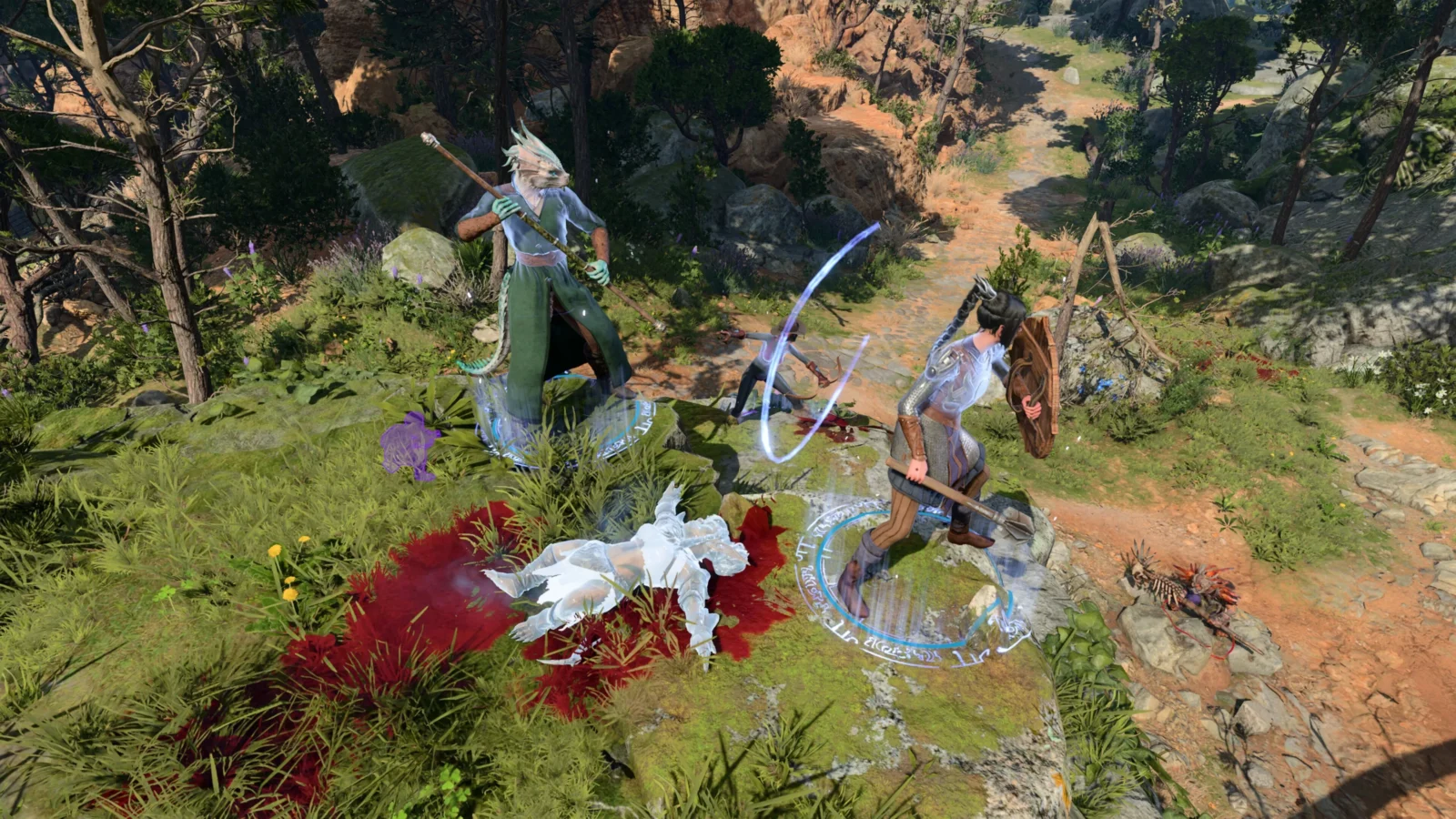
The turn-based combat rewards creativity over optimization. Battles play out on a grid of positioning, height, light and terrain, governed by real dice rolls — the d20 is always visible, always honest, and always capable of ruining your day at the worst possible moment. But within that structure lies astonishing freedom. Shove enemies off ledges, throw potions at wounded allies, set oil barrels ablaze, electrify pools of water, sneak a smokepowder barrel into a boss’s pocket, or talk your way out of the fight entirely. Few games respect player ingenuity this much, and fewer still are built so thoroughly around it.
With twelve classes, dozens of subclasses, multiclassing and a mountain of magical items, character building is a joy in itself. A bard can be a silver-tongued diplomat who avoids violence altogether; a barbarian can solve problems exclusively by throwing smaller enemies at bigger ones. Encounters are designed as puzzles with many solutions, and the game almost always has a response ready for whatever ridiculous idea you try.
A World Dense With Handcrafted Detail
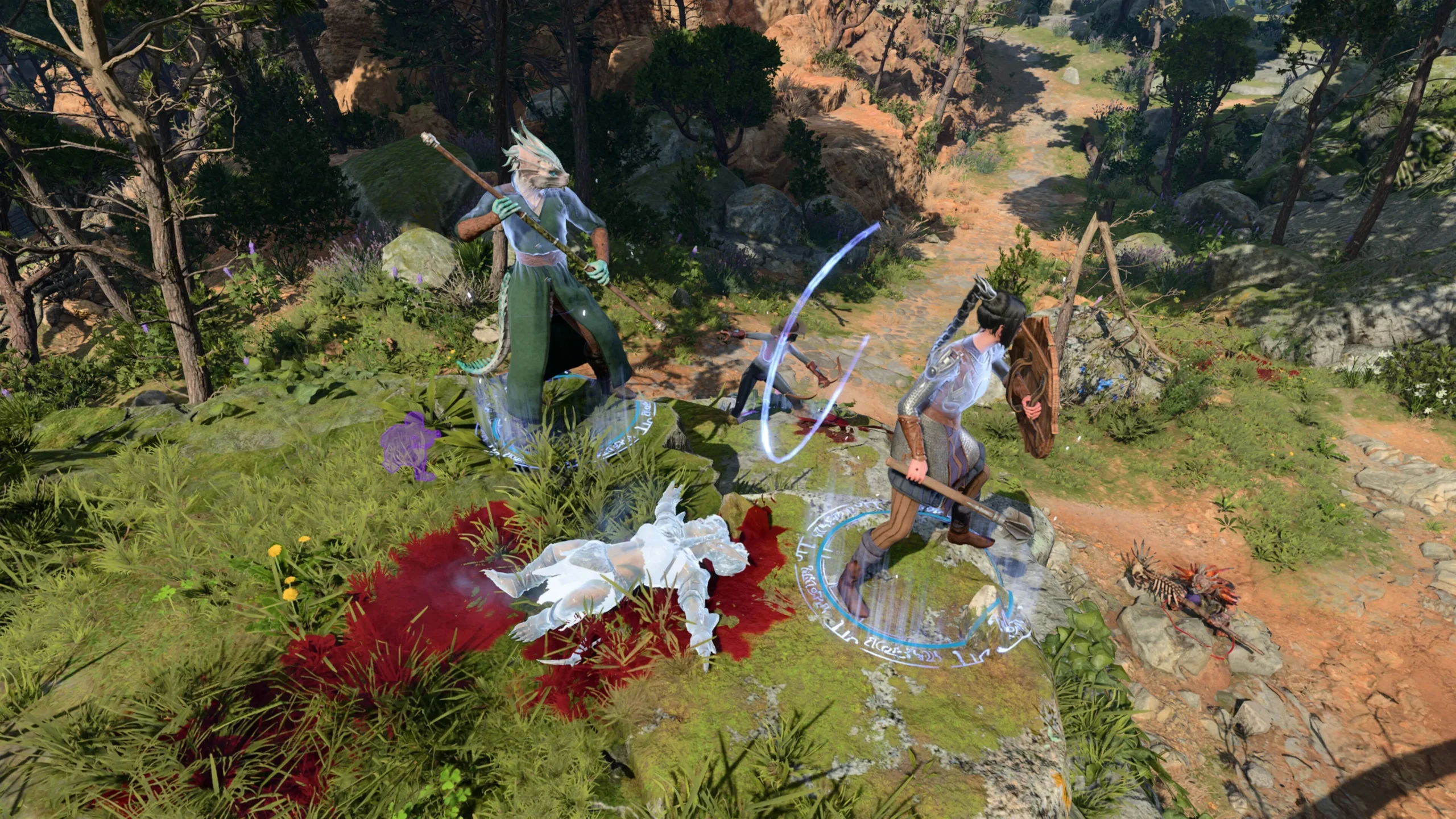
Where many RPGs pad their maps, Baldur’s Gate 3 concentrates. Every building in the city, every cave and crypt, feels placed by hand and filled with stories — notes, environmental clues, hidden chambers and small tragedies told without a single line of dialogue. The voice acting is exceptional across the board, performed with full motion capture, and the presentation — from spell effects to the narrator’s wry guidance — is consistently superb. This is a game where you can spend an hour happily exploring a single wine cellar.
It is also a complete package in an era of chopped-up releases: a huge single-player campaign that can run well past a hundred hours, no microtransactions, and full cooperative multiplayer for up to four players online, plus split-screen on console. Playing with friends, each making their own chaotic choices, is an experience almost nothing else offers. Larian has continued to support the game with major free patches since launch, adding new endings, a photo mode and an ultra-hard Honour Mode for players who want a single-save permadeath challenge.
Visuals and Performance
The game is gorgeous — richly lit environments, expressive faces and spell effects that turn big battles into light shows. Performance is generally strong on PC and PS5; the dense third act in the city was demanding at launch, particularly in split-screen, though patches have improved matters considerably. The Xbox version arrived slightly later, in December 2023, completing the platform line-up. Minor bugs and the occasional camera quirk in tight spaces remain, but they are footnotes on an otherwise polished production.
Built to Be Played Again (and Again)
Most hundred-hour games are finished once and shelved. Baldur’s Gate 3 is engineered for the opposite. A second campaign is not a repeat with different dialogue sprinkled on top — it is a genuinely different story. Play as a custom hero, then as the Dark Urge, then as one of the origin characters themselves, and entire scenes, relationships and endings rearrange themselves around you. An “evil” playthrough is fully supported with its own companions, powers and consequences, rather than being a good campaign with ruder dialogue options. Whole regions can be resolved through stealth, diplomacy, deception or cataclysmic violence, and the game remembers which you chose dozens of hours later.

For players who master the standard difficulty, Tactician mode sharpens enemy AI and adds new abilities to bosses, while Honour Mode layers a single-save, permadeath run on top for the truly fearless. And the community keeps the game alive between campaigns: Larian’s later patches added an official modding toolkit, opening the door to player-made classes, spells, cosmetics and adventures on PC and console alike. Few games respect your time this much by making the second hundred hours feel as fresh as the first.
There is also the simple matter of how it plays with a partner. Drop a friend into your campaign and the game happily splits its attention between two protagonists making independent — often hilariously conflicting — decisions. One of you is negotiating peace while the other is caught pickpocketing the quest giver, and the game never blinks. It is the closest any video game has come to the beautiful chaos of a real tabletop group, and for many players it alone justifies the purchase.
Verdict
Final score: 9.7/10. Baldur’s Gate 3 won Game of the Year at The Game Awards 2023, and it earned every vote. It sets a new standard for player-driven storytelling: a game that trusts you, reacts to you, and surprises you for a hundred hours and beyond. If you love RPGs, tabletop gaming, or simply stories that bend around your decisions, this is not just a recommendation — it is an obligation. It earns its place among the all-time greats.