Here is the honest truth about Dota 2: it is the most rewarding game on Steam, and also the most confusing one to start. I have watched plenty of new players bounce off it in their first week, not because the game is bad, but because nobody explained the basics in plain English. This Dota 2 beginner’s guide does exactly that. No jargon walls, no assumption that you already know what a “pos 4” is. Just the stuff that actually helps you survive your first ten games and start enjoying them.
And if you are wondering whether it is worth learning in 2026, the numbers answer that for you. Dota 2 is still the second most-played game on Steam, with hundreds of thousands of players online every single day, and it costs nothing to download. The player base is not going anywhere. So let us get you up to speed.
What Is Dota 2, Exactly?
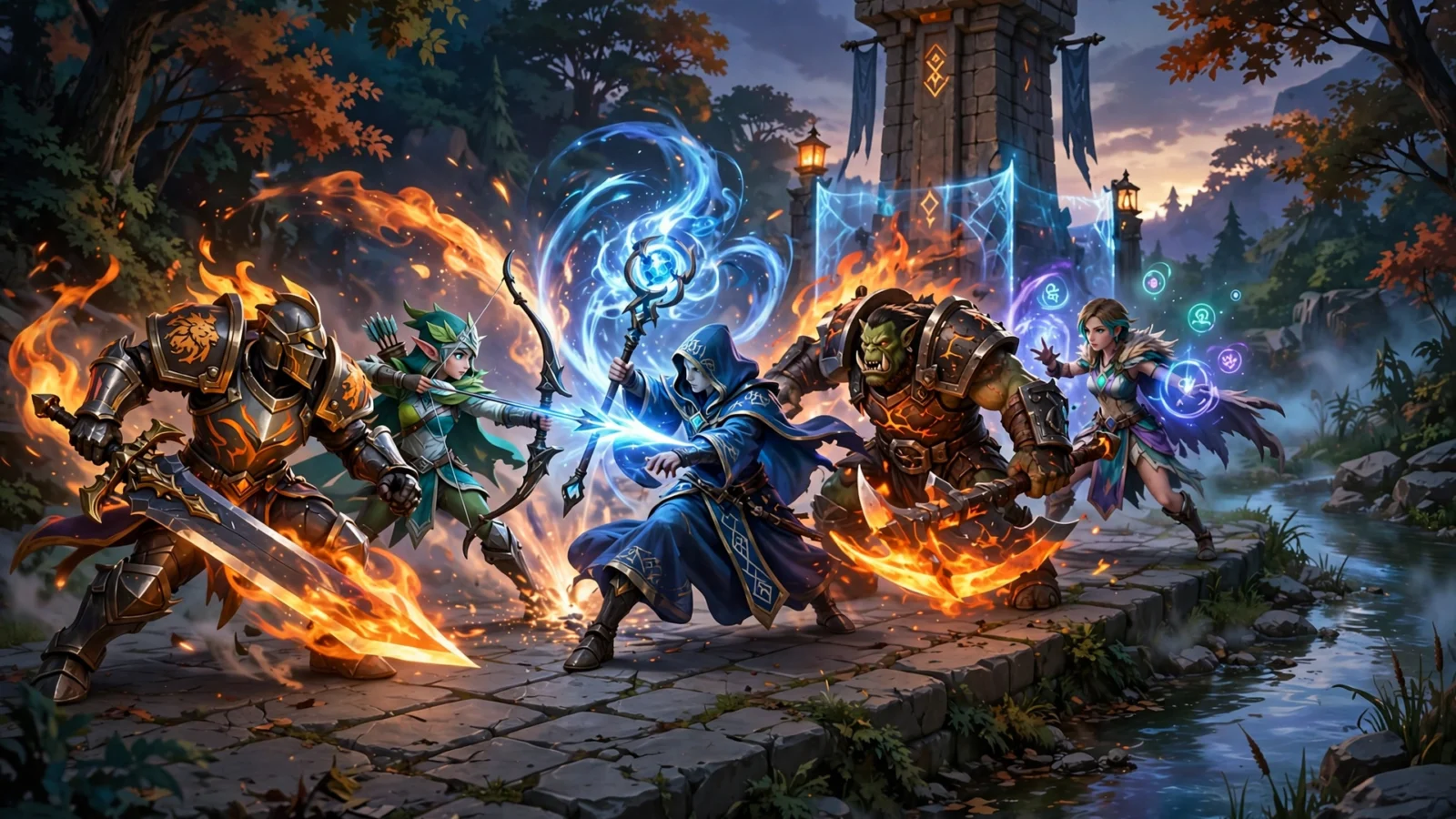
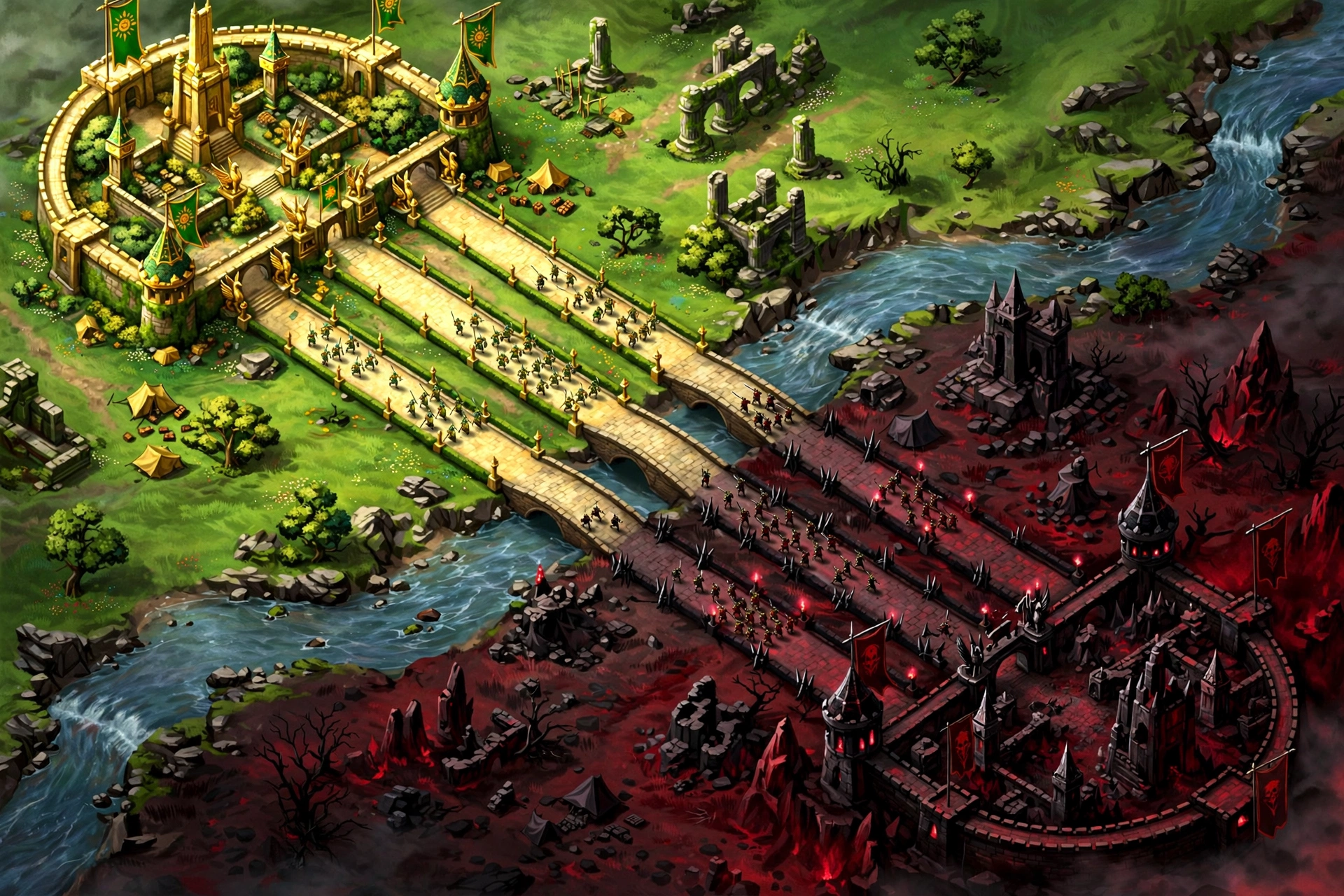
Dota 2 is a 5v5 MOBA from Valve, free to play on Steam. Two teams of five pick heroes, fight across a map with three lanes, and try to destroy the enemy team’s Ancient, the big structure sitting inside each base. That is the whole game in one sentence. Everything else, the items, the heroes, the map control, is just a means to that end.
There are 127 heroes in the game as of patch 7.41f, and every single one of them is free from your very first match. Nothing is locked behind a paywall, which is rare these days. A typical match lasts around 30 to 45 minutes, though a one-sided game can end sooner and a tense one can drag past an hour. Matches are split into three rough phases: the laning phase, where you farm and trade blows in your lane; the mid game, where teams group up and fight over towers and objectives; and the late game, where one big teamfight can decide everything.
One thing that surprises new players: the map is not symmetrical in the way you might expect. You play as either Radiant (bottom-left base) or Dire (top-right base), and the lanes behave slightly differently depending on which side you are on. Do not worry about that yet. Your first job is much simpler: learn one hero, learn your lane, and learn to last hit.
Dota 2 Roles Explained: Positions 1 to 5
The single most important thing to understand early is that Dota 2 has five roles, numbered 1 to 5, and each one has a different job. Picking a hero without knowing your role is like joining a football team without knowing your position. Here is the short version:
- Position 1, the Carry: the safe-lane farmer. You spend the early game quietly collecting gold and experience, then become the team’s main damage dealer late on. Juggernaut and Wraith King are classic examples.
- Position 2, the Mid: you play the middle lane alone, level up fast, then rotate to other lanes to create kills. Puck, Viper and Storm Spirit live here.
- Position 3, the Offlane: the tough one. You play the hard lane, soak up pressure, start fights and take hits so your carry does not have to. Axe, Mars and Centaur Warrunner are the usual picks.
- Position 4, the Soft Support: you help the offlaner, roam around the map and set up kills. Ogre Magi and Spirit Breaker are great starters.
- Position 5, the Hard Support: the team’s backbone. You buy wards, protect the carry and need the least gold to do your job. Crystal Maiden, Lion and Witch Doctor are perfect first picks.
New players usually have the most fun starting as a position 1 or 5, because the job is clear: farm safely, or protect and support. Mid is the hardest role to learn first, since you are on your own and everyone watches your lane. If your team asks you to fill a role you have never played, just say so in chat. Most players would rather know upfront than find out mid-game.
What Are the Best Dota 2 Heroes for Beginners?
Valve itself makes this easy. The game has a New Player Mode that limits you to 20 heroes, and that list is basically Valve telling you which heroes are safe to learn with. Valve also rates 55 of the 127 heroes as the easiest tier, so you are spoiled for choice. My advice: pick one hero per role from the list below and play each of them for a few games before moving on. Depth beats variety when you are learning.
- Carry: Wraith King or Juggernaut. Wraith King is probably the single most forgiving hero in Dota 2, because his ultimate, Reincarnation, brings him back to life after he dies. One mistake per fight, forgiven automatically. Juggernaut’s Blade Fury makes him immune to most disables and lets him farm safely.
- Mid: Viper or Sniper. Both win their lane by right-clicking, with no tricky combos to memorise. If you can click on an enemy, you can play them.
- Offlane: Dragon Knight or Axe. Both are tanky, simple and still strong at high levels of play, so nothing you learn goes to waste.
- Soft support: Ogre Magi. He is hard to kill, has a stun, a slow, and a buff that makes your carry hit faster. Simple, effective, fun.
- Hard support: Crystal Maiden, Lich or Lion. Every one of them has a disable, a big area spell and a clear job in every fight.
Avoid the complex heroes for now. Valve’s own data puts heroes like Invoker, Meepo, Earth Spirit, Io and Arc Warden in the hardest tier, and there is a reason for that. They are brilliant once you understand the game, and miserable before that. Learn the game first, then learn them.
How Do You Last Hit and Deny in Dota 2?
If there is one skill that separates new players from decent ones, it is this. In Dota 2, you only earn gold when you land the killing blow on a creep. Standing next to a dying creep earns you experience, but no gold. So last hitting, timing your attack so you get the final hit, is how you afford items. Miss your last hits and you fall behind, no matter how well you fight.
Here is how to practise it. First, turn off auto-attack or get in the habit of pressing the stop key when you are not last hitting. If your hero swings at every creep automatically, the wave pushes towards the enemy tower and you end up farming in dangerous territory. Wait, watch the creep’s health bar, and attack only when one hit will kill it. It feels slow at first. It is supposed to. Patience is the skill.
Then there is denying, the mechanic that makes Dota 2 unique. You can attack your own creeps when their health is low, below 50 percent for melee creeps and 40 percent for ranged ones, and killing them yourself stops the enemy from getting the gold and cuts the experience they earn. It is strange the first time you do it, attacking your own team on purpose, but it is one of the strongest tools in the laning phase. You can even deny your own tower when it drops below 10 percent health, which cuts the gold the enemy team gets for taking it.
A realistic early target: aim for 40 to 50 last hits in the first ten minutes of a calm lane. Do not beat yourself up if you miss plenty at first. Even experienced players drop last hits under pressure. The best way to improve is the demo hero mode, where you can practise last hitting alone for ten minutes before you queue. Ten minutes of that before a session does more for your game than any guide ever will.
Wards, Couriers and TP Scrolls: The Small Things That Win Games
New players tend to ignore three things, and all three are cheap and game-changing.
Wards win games. Observer Wards give your team vision of an area, and vision is how you avoid getting ganked. Place them on high ground near the river, near runes and around objectives like Roshan. Sentry Wards reveal invisible enemies and enemy wards, so buy them if the other team has invisible heroes or if you suspect they have vision of you. If you are playing support, warding is literally your job. If nobody on your team is buying wards, buy them yourself, whatever role you are playing.
Use your courier. Your courier delivers items to you in lane so you never have to walk back to base. At the start of the game your support should buy one, and after that every player has their own. If your team forgets, just buy it yourself, it is cheap, and it keeps you farming instead of running home every two minutes. Never send it through the river or enemy territory with expensive items on board, because the enemy will happily kill it.
Always carry a Town Portal scroll. TP scrolls let you teleport to any friendly tower, and they cost almost nothing, roughly the gold of three last hits. After the first fifteen minutes, not having one is how you lose towers while standing in the wrong lane. Buy one every time you go back to base. It is the best gold you will spend all game.
How to Win Your First Dota 2 Games
Winning in Dota 2 is rarely about getting the most kills. It is about taking objectives. Towers, Roshan and the Ancient are what end games, and a team that pushes together wins far more often than a team of five players each hunting kills alone.
Play around your team’s power spikes. When your carry finishes a big item, or your team hits level six and gets ultimates, that is the time to group up and take a tower. When you are behind, do the opposite: farm safely, avoid fights you cannot win, and wait for the enemy to overextend. Patience wins more low-level games than aggression does, because somebody on the enemy team will always get impatient first.
Roshan deserves a mention because new players either ignore him or walk into him at the worst moment. Roshan is the big boss in his pit near the river. Killing him gives your team the Aegis of the Immortal, which grants one free life to whoever carries it. Check whether the enemy has vision there, and never try to take him alone unless your hero is built for it.
And a practical note: get your settings right before you queue. A clean setup with good visibility and stable frames makes every other lesson in this guide easier to apply, so once you are comfortable, read our Dota 2 best settings guide for max FPS and tune the game to your PC.
5 Beginner Mistakes to Avoid in Dota 2
- Chasing kills across the map. Every death gives the enemy gold and experience, and a kill that costs you your life is usually a bad trade. If a fleeing enemy runs past your tower, let them go.
- Auto-attacking every creep. This pushes your lane, puts you in danger and costs you last hits. Attack only when you mean to kill.
- Ignoring the minimap. Glance at it every few seconds. If three enemy heroes are missing, they are probably coming for you. The minimap is free information, use it.
- Fighting alone. Dota 2 is a 5v5 game, not five solo games happening at once. If your team is grouped and you are farming the far side of the map, you are the easiest kill on the board.
- Buying the wrong items. Use the in-game suggested item build for your hero, it is genuinely good for beginners, and do not copy pro builds until you understand why they buy what they buy.
If you only remember one thing from this list, make it the first one. Dying less is the fastest way to climb out of the beginner bracket. It sounds boring, it works, and it is the lesson most new players learn last.
Dota 2 Beginner FAQ
Is Dota 2 free to play?
Yes. Dota 2 is completely free on Steam, and all 127 heroes are unlocked from your first match. You never have to pay to access a hero, and spending money only buys cosmetic items that do not affect gameplay.
How many heroes are in Dota 2?
There are 127 heroes as of patch 7.41f, and Valve rates 55 of them as the easiest tier. If you are just starting, the game’s New Player Mode narrows that down to 20 beginner-friendly heroes, which is a much better place to begin.
How long does a Dota 2 match take?
Most matches last 30 to 45 minutes. One-sided games can finish in under 25 minutes, while close games can run past an hour. Plan for roughly 40 minutes when you queue, and do not start a ranked match if you cannot stay for the full game.
Which hero should I play first?
Wraith King is the safest first pick in the game. His ultimate gives him a second life, so one mistake per fight is forgiven automatically, and his abilities are simple enough to learn in a single game. Crystal Maiden is the best first support, and Sniper is the easiest way to learn the mid lane.
That is the foundation. Pick one hero, learn your role, practise your last hits, and give yourself ten games before you judge anything. Dota 2 rewards patience more than any other game on Steam, and once the basics click, there is nothing else quite like it. If you enjoy MOBAs with a different flavour, our Deadlock beginner’s guide covers Valve’s other big multiplayer hit, and our Apex Legends beginner’s guide is there when you want a break from the lanes. See you on the river.