
Here is the honest truth about Moon Sweepers: the job sounds silly, and then it eats your whole evening. You land on the Moon with a toothbrush, a mountain of grey dust in front of you, and a budget that would embarrass a lemonade stand. And somehow, an hour later, you are planning conveyor belts in your head.
These Moon Sweepers tips are for players who want to get past that slow first hour without wasting money on the wrong upgrades. Moon Sweepers, the co-op cleaning game from two-person studio DragDrop Games, launched on Steam on October 23, 2026, and shot up the charts in its first week. It is Windows-only on Steam for now, costs $8.99, and supports solo play or crews of up to 16 players. The core idea never changes, so once you understand it, every decision gets easier.

How to make money fast in Moon Sweepers?
Everything in Moon Sweepers runs on one loop, and the sooner you respect it, the faster you earn. Sweep dust, fill your tool, haul it to a depot, launch the shipment, and get paid. Then spend the money on something that lets you sweep, carry, or sell faster next time.
That last part is where most new players go wrong. They save for something shiny, or buy every small upgrade the second it appears, and then wonder why the money never grows. Early on, cash should go into dust per minute. A wider sweep, a bigger container, a shorter walk back to the depot — those quietly raise your income, because you spend less time walking and more time cleaning.
Start close to your base, too. The ground right outside your station is the cheapest dust you will ever collect, simply because the trip back is short. Wander off to a distant crater with a toothbrush and you will spend most of your session hiking. Clear what is near you first, bank the money, and let better tools earn you the right to roam.
What should you buy first in Moon Sweepers?
There is no official price list from the developer, so treat the figures below as what players reported in launch week — a guide, not gospel. The order, though, is widely agreed.
- Brooms first. Your toothbrush is a starting point, not a career. A better broom sweeps wider ground, and players report an upgraded broom holding roughly 100–120 kg.
- Save about $700 for a garage. This is the purchase that changes the game. A garage stores, calls back, and upgrades your vehicles, and players say unloading at a garage packs your dust automatically. It is the bridge between hand tools and real machinery.
- Buy the push vacuum as soon as you can after the garage. Players keep recommending it “as soon as possible,” and it is easy to see why: it clears ground far faster than any broom, and it sets you up for vehicles.
- Then think vehicles and automation. Robot vacuums clean a set area on their own, and the Mega Vacuum Rover is the big step up — one player reports a fully upgraded rover holding around 5,700 kg.
Do not max out a single hand tool while vehicles are still out of reach. Tools are the early game; vehicles take over later. Your goal in the first hours is to buy your way out of hand-sweeping.
How do you auto-sell dust in Moon Sweepers?
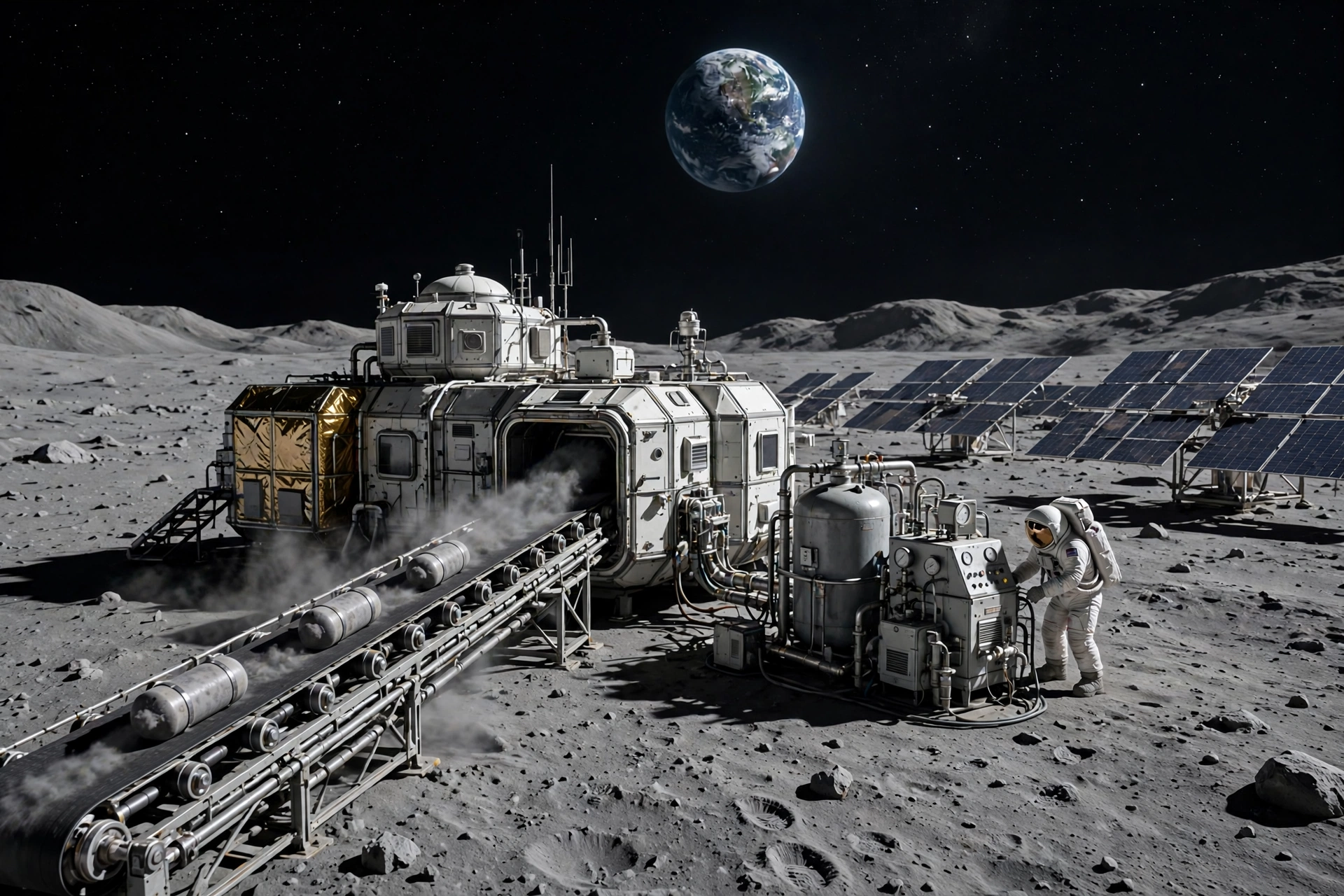
Hand-delivering every load gets old fast. Once you have a conveyor belt running into your base, selling happens while you clean.
The trick is the base’s intake valves — the windows with orange rings. Run a conveyor belt into those valves and whatever arrives on the belt gets sold automatically. A Packager can help by unloading tools faster, but players report it is optional for auto-selling itself. The key is the connection: a belt that stops just short of the intake is just a very expensive decoration.
Two details save a lot of frustration here. First, when a tool’s container fills up, its dust gets packed into capsules, and players report that a quick tap of Q puts a tool’s contents onto a belt, while holding Q throws the canister instead — worth knowing, since one player notes the in-game tooltip misleadingly says F. Second, belts are slow and, according to forum replies, there is no conveyor speed upgrade. If one line cannot keep up, run more lines in parallel.
Also, place things where you work. Selling a building only refunds 75% of its cost, and players describe the penalty for moving machines as severe. Put depots and machines near your cleaning area from the start, and build a new depot when you move further out.
Is the Moon Sweepers stone press worth it?
Short answer: yes, but only once your belts are running. Refining is the game’s main money multiplier.
A pressure chamber costs a reported $500, draws 20 kW, and turns dust into sand. A stone press costs a reported $1,000, draws 28 kW, and needs a chamber feeding it. One forum calculation put the sale values at $1.28 for dust, $3.84 for sand, and $17.92 for stone, with a 28% market bonus included. Stone, in other words, is worth far more than the dust it came from.
The catch is that the stone press has separate dust and sand inputs, and they are not interchangeable. That is the most common reason players report the press as “not working” — one input is full while the other sits empty. Feed both, and watch power: the chamber and press together draw 48 kW, so build solar panels and battery storage before you scale up.
One chamber can feed more than one press, too. Players measured a single chamber producing around 25 sand per minute against roughly 10 sand per minute consumed by each press, so one chamber comfortably feeds two presses with splitters. Start with one chamber and one press, and only then expand.
Can you play Moon Sweepers solo, and how does co-op work?
Yes, you can play Moon Sweepers completely solo, but go in with your eyes open. The Moon is enormous — one solo player reported reaching only about 1% cleaned after 12 hours — so a solo run is a long, relaxing grind. If you play alone, prioritise robot vacuums and refining early.
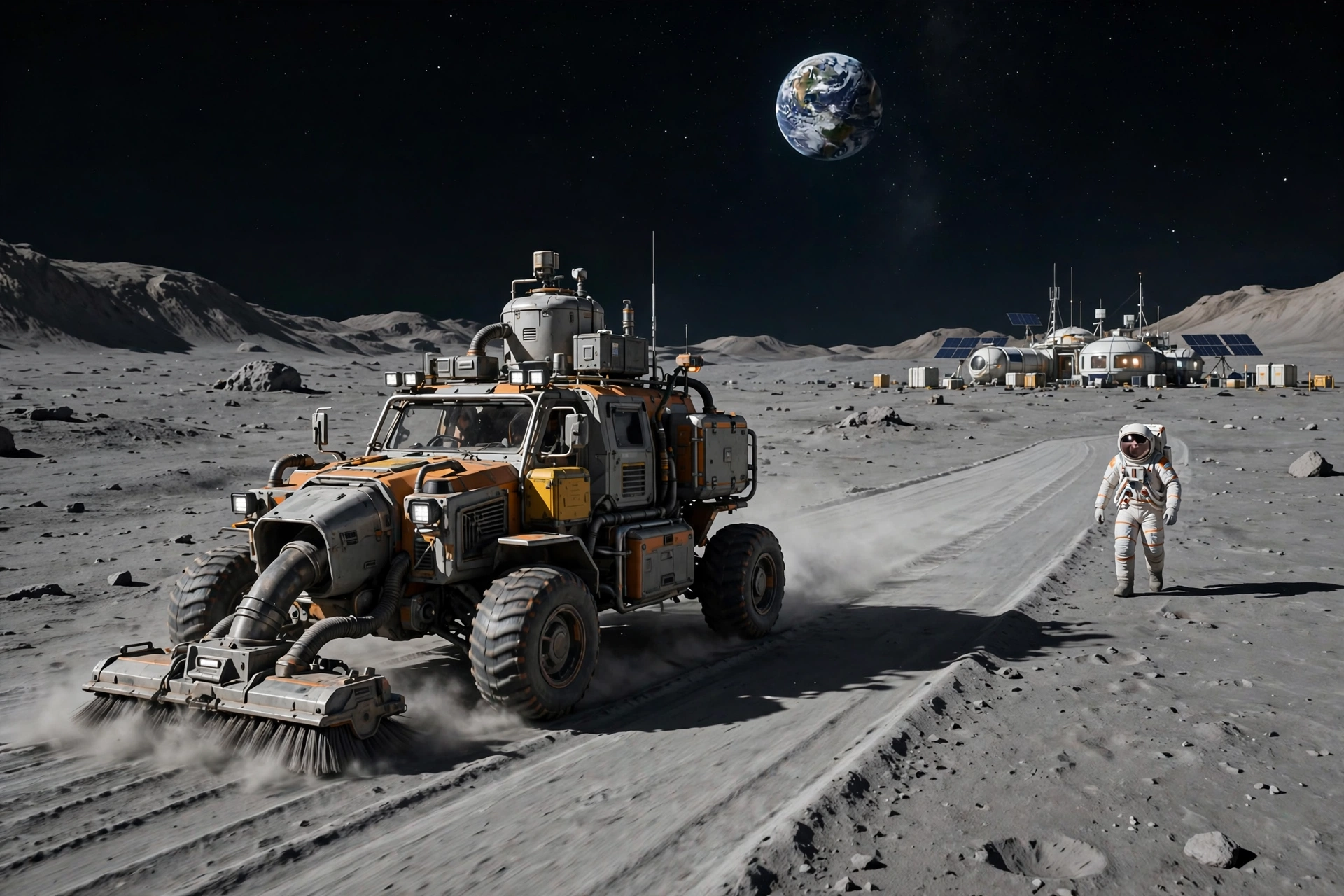
Co-op is where the game really opens up, with online lobbies of up to 16 players. Since patch 1.0.3, the whole crew shares the host’s upgrade tree, so anyone’s purchase upgrades everyone. That makes splitting roles sensible: a sweeping team out on the surface, plus one or two players building belts and refining, so the dust always has somewhere to go. Everyone does need to be on the same version to play together.
A word on the J.O.O.N.A.S. robots: they can carry and process material for you, but they were the shakiest part of automation at launch, with the developers listing robots stopping when players moved away as a top priority. Later patches improved them and added save backups — but belts and garages remain the reliable backbone. Build around those first, and treat robots as a bonus, not a plan.
If you like low-pressure co-op, try our Phantom Blade Zero beginner’s guide or our PUBG beginner’s guide, and for a settings-first take on another Steam hit, see our ARC Raiders best settings guide. Find the game on Moon Sweepers on Steam and at moonsweepers.com.
Moon Sweepers FAQ
Is Moon Sweepers on PS5 or Xbox?
No. As of late October 2026, Moon Sweepers is a Windows PC game on Steam only, with no PS5, Xbox, Switch, or Mac version announced, and no demo or Game Pass version.
How many players can play Moon Sweepers together?
Up to 16 players in online co-op lobbies, according to the Steam page. You can also play the whole game solo if you prefer a slower, quieter grind.
How much does Moon Sweepers cost?
The regular price is $8.99 on Steam. A 15% launch discount briefly brought it to $7.64 until October 30, 2026, so check the live store page for the current price.
Moon Sweepers works because it never pretends the job is glamorous. It just gives you a brush, a Moon, and a slow climb from toothbrush to rover. Sweep near home, save for the garage, automate your selling, refine before you expand, and let the crew share the work.