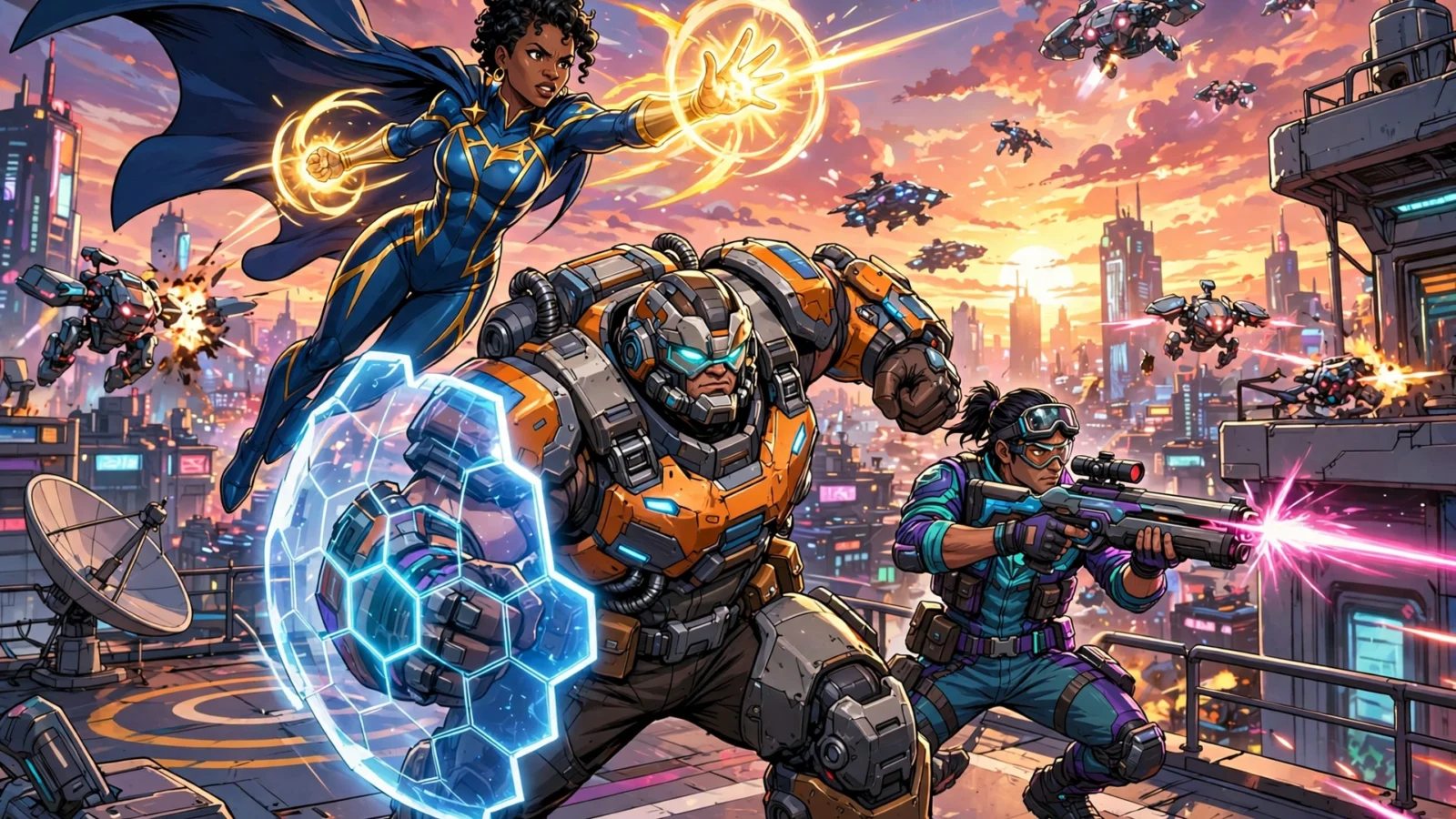
Marvel Rivals can feel like a lot at first. Flashy ultimates are flying everywhere, the objective is moving, and someone on your team is already asking you to switch heroes. Take a breath. Under all that noise, it is a friendly game to learn — especially because it is free to play, every hero is available without buying characters one by one, and you can contribute from your very first match if you pick the right hero and play the objective.
This Marvel Rivals beginner’s guide is built for that first week. No jargon for its own sake, no assumption that you already play hero shooters, and no tier-list pressure. We will cover the three roles, the easiest heroes to start with, the three main modes, the habits that actually win matches, and a sensible set of PC settings so the game feels smooth while you learn.
Think of your first ten matches as practice with real teammates, not a test. You are learning maps, hero timings, and when to fight and when to back off. That is normal, and it is exactly how every good player started.
How do you play Marvel Rivals for beginners?
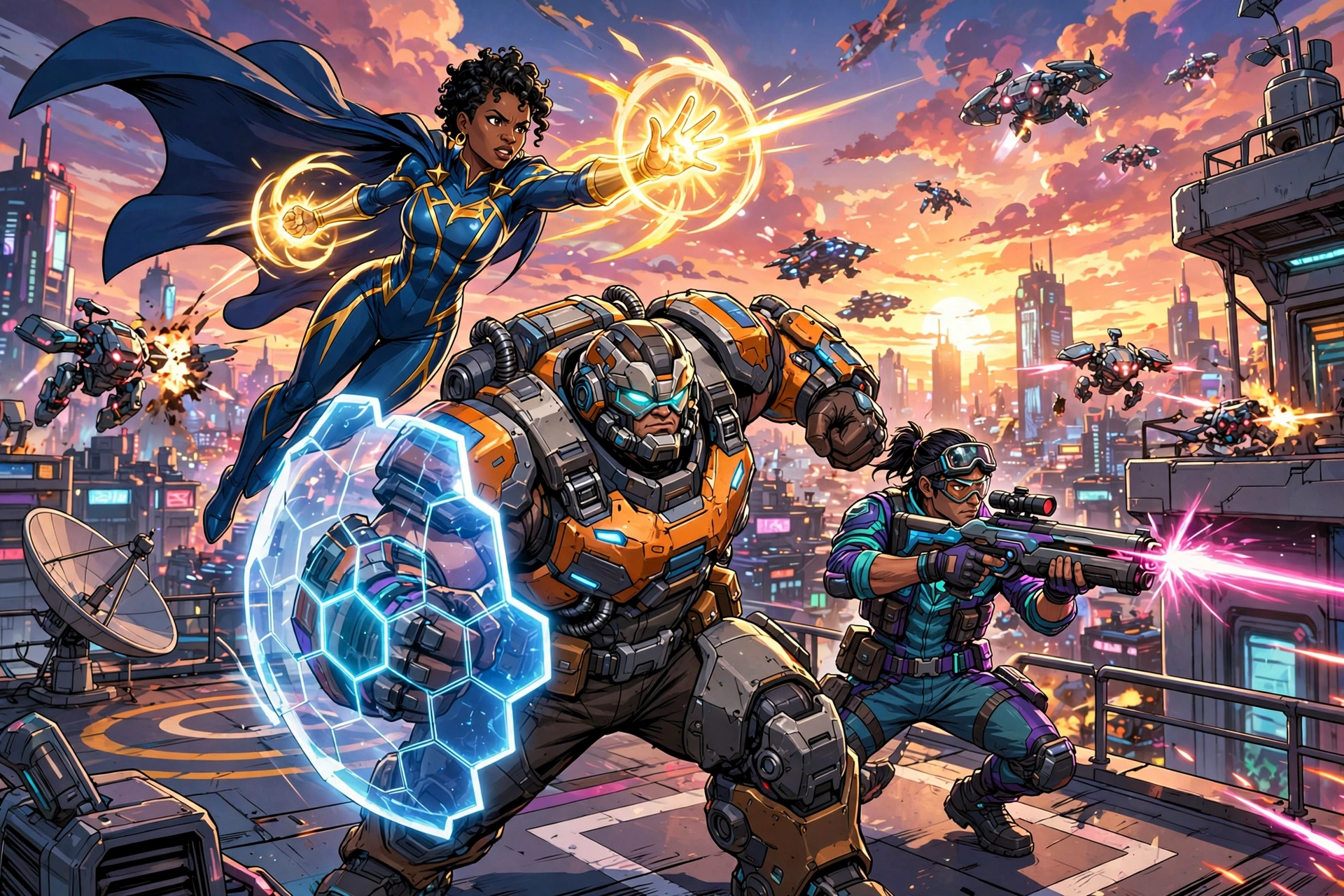
At its heart, Marvel Rivals is a 6v6 team shooter. You and five teammates pick heroes, then fight the other team for an objective. Kills help, but they are not the whole game. In most matches, the team that stands on the point, escorts the payload, or captures checkpoints at the right moment wins — even if the kill feed looks close.
Each hero has a normal attack, a few abilities, and an Ultimate Ability that charges up as you play. Ultimates can swing a fight, but they work best when they are not wasted. A solo ultimate into six healthy enemies usually achieves nothing. The same ultimate, used just as your team pushes together, can break a defence wide open.
Two ideas make Marvel Rivals feel different from a regular shooter. First, certain heroes get Team-Up abilities when paired together, so team composition matters more than just picking your favourite character. Second, parts of many maps are destructible. Cover you relied on a minute ago can disappear, and a wall that blocked a sightline can suddenly open up. Stay ready to move, and do not treat any one spot as permanently safe.
If you are coming from another shooter, our Modern Warfare 4 beginner’s guide covers a lot of the same multiplayer habits — map awareness, not fighting alone, and playing for the team rather than the kill feed.
What are the three roles in Marvel Rivals?
Every hero belongs to one of three roles. Learning what each one is supposed to do will make team fights click much faster than memorising every ability on day one.
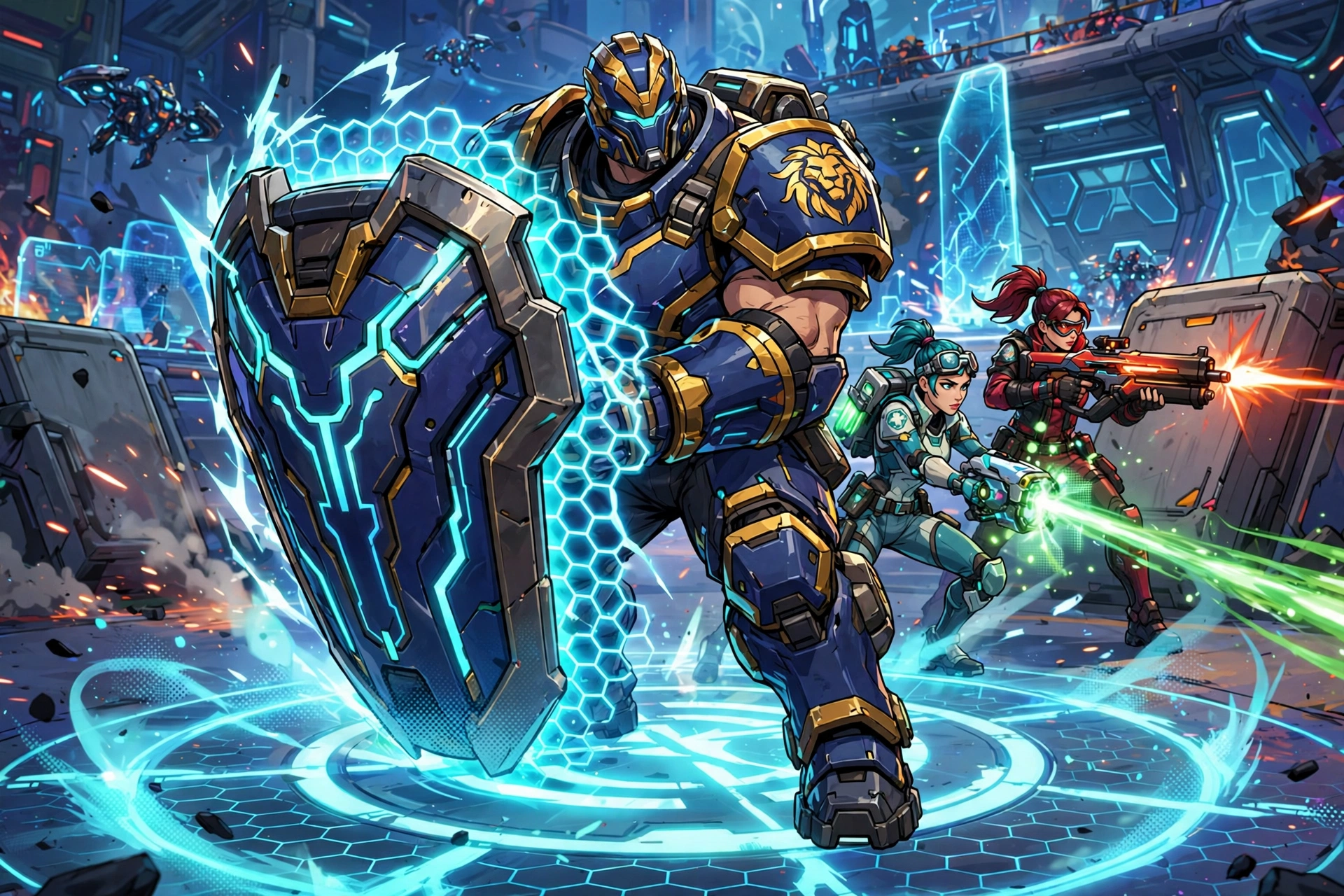
- Vanguard: the frontline. Vanguards have more health, soak up damage, hold space, and lead the push onto an objective. If nobody plays Vanguard, your team usually melts the moment a fight starts.
- Duelist: the damage dealers. Duelists finish targets, pressure the backline, and punish mistakes. They usually play behind Vanguards or on a flank, not by running straight into six enemies alone.
- Strategist: support. Strategists heal, protect teammates, and add utility that keeps a push alive. A good Strategist is often the reason a team survives a fight it looked like losing.
A balanced starting point is two heroes from each role — 2-2-2. It is not a rule the game forces on you, and plenty of teams win with other mixes, but for a beginner it is the easiest way to make sure your team has frontline protection, damage, and healing at the same time.
Which Marvel Rivals hero should I start with?
Start small. Pick one forgiving hero in each role, learn those three properly, and only then branch out. That way you can fill whatever your team is missing instead of being stuck when someone else takes your only hero.
A useful shortcut is the Marvel Rivals Wiki difficulty rating, which scores heroes from 1 to 5. Eight heroes sit at the easiest rating of 1: Venom and The Thing among Vanguards; Scarlet Witch, Squirrel Girl and The Punisher among Duelists; and Jeff the Land Shark, Mantis and Rocket Raccoon among Strategists. That rating describes how hard a kit is to play well, not how strong the hero is, so use it to choose what to learn first rather than what to lock in forever.
Here is a simple starter trio to try in the practice range before your first real match:
- Vanguard — Venom: tough, straightforward, and forgiving when your positioning is still a work in progress.
- Duelist — Scarlet Witch: her main attack is much more forgiving on aim than a precision sniper, so you can focus on positioning and timing.
- Strategist — Jeff the Land Shark: a fun, approachable way to learn healing, movement, and staying alive while helping your team.
The Punisher is another excellent first Duelist if you come from traditional shooters, because his rifle-based kit feels instantly familiar. Groot is a popular early Vanguard too, since his walls teach you area control without demanding perfect mechanics. On the other hand, heroes rated at the top of the difficulty scale — Spider-Man and Psylocke are often named there — are best saved until you know the maps and the flow of a fight. They are not bad picks; they are just a steeper first climb.
For a deeper look at starter picks, the beginner heroes guide breaks down those difficulty-1 heroes by role. You can also check the official Marvel Rivals site for the full roster and news about new heroes.
What are the game modes in Marvel Rivals?
Quick play and ranked revolve around three core modes. Knowing the win condition before the match starts stops that confused feeling of running around while your team does something completely different.
Domination: both teams fight for a single control point. Hold it until it reaches 100%, then do it again on a second map. The first team to win two points takes the match. This mode rewards holding ground, controlling entrances, and not over-chasing kills away from the point.
Convoy: one team escorts a moving objective along a route while the other tries to stop it. Attackers need to stay near the objective and keep pressure up; defenders should set up, stall, and burn the clock rather than trickling in one by one.
Convergence: a mix of the two. Attackers first capture a point, then escort an objective through checkpoints. Defenders try to hold the first point long enough that attackers run out of time. If you are attacking and the first capture fails repeatedly, regroup and push together instead of feeding the defence one hero at a time.
There are also arcade modes such as Conquest and Doom Match for a lower-pressure change of pace. They are a good place to practise a new hero’s abilities without worrying about a ranked-style objective.
How do I win more matches in Marvel Rivals?
Most beginner wins do not come from incredible aim. They come from five or six small decisions, repeated every fight. Try this checklist for your next few matches:
- Play the objective first. If the point is uncontested, stand on it. If the convoy is moving, stay with it. Kills away from the objective often feel good and change nothing.
- Regroup after a lost fight. Wait for teammates to respawn and push as six. Running back alone just hands the enemy another easy elimination and staggers your team.
- Save ultimates for team fights. Combo them when you can — one ultimate to start the chaos, another to finish it — rather than using yours the second it lights up.
- Use high ground and cover. A Duelist on high ground sees more and gets shot less. A Strategist behind cover heals longer. Move when your cover gets destroyed instead of standing in the open out of habit.
- Ping and communicate. Even simple pings — enemy here, ultimate ready, fall back — help a team of strangers play like a team. You do not need voice chat to be useful.
- Learn one map at a time. Notice where health packs are, which routes flank the point, and where fights usually break out. Map knowledge quietly wins more fights than a slightly better aim ever will.
And one honest tip: losing a match while learning is not wasted time. After a tough loss, ask one question — did we lose fights, or did we lose the objective? That answer tells you what to practise next, whether it is positioning, ultimate timing, or simply staying together.
What are the best settings for Marvel Rivals on PC?
You do not need a perfect setup to enjoy the game, but a smooth, readable picture helps a lot when team fights get busy. Start with the game’s own Performance Test under Settings and Display if it is available in your version — it is designed to highlight whether your CPU, GPU, or something else is the bottleneck, so you are not guessing.
For a performance-first starting point, try these and adjust one at a time:
- Display Mode: Fullscreen for the most direct path to your monitor.
- Model Detail: Performance, if that option is offered in your build.
- Global Illumination and Reflection Quality: Off or Low to start.
- Anti-Aliasing: Off, or an upscaler such as DLSS, FSR, or XeSS on Performance or Balanced if your card supports it.
- Texture Quality: Low or Medium, especially if you have limited video memory. Turning off the high-resolution resource pack can also free up VRAM.
- Shadow Quality: Low rather than Off — low shadows are cheap, and enemies still cast a shadow you can read around corners.
- Motion Blur and Depth of Field: Off. Blur makes fast turns harder to track.
- V-Sync: Off to reduce input lag, and cap your frame rate a few frames below your monitor’s refresh rate for steadier pacing.
- NVIDIA Reflex Low Latency: On plus Boost, if you have a supported NVIDIA card.
Settings labels can change between updates, so use the options your installation actually shows rather than copying an old configuration word for word. Change one setting, play a match, and see how it feels — that beats changing ten things at once and having no idea which one helped. If you enjoy tuning shooters, our CS2 best settings guide follows the same approach: clarity first, then eye candy.
Common beginner mistakes to avoid
Almost every new player makes the same handful of mistakes, and they are all easy to fix once you spot them. Chasing a low-health enemy across the whole map while your team loses the point is the classic one. So is holding onto an ultimate for the “perfect” moment that never comes — use it in a real team fight and learn from what happens.
Another is never switching heroes. If your team has no healing, or the enemy keeps diving your backline and nobody can stop them, a switch is not giving up. It is the game working as intended. Marvel Rivals rewards flexible players, and learning one hero per role early makes switching feel natural instead of scary.
Finally, do not judge a hero after one bad match. A hero that felt weak on a map you did not know, against a team composition you had never seen, might feel completely different once you understand the matchup. Give your starter trio a few matches each before deciding what to main.
Marvel Rivals beginner FAQ
Is Marvel Rivals free to play? Yes. Marvel Rivals is free to play, and its heroes are available without requiring individual character purchases, so the main thing you are investing as a beginner is time, not money.
What is the easiest hero in Marvel Rivals for beginners? There is no single easiest hero for everyone, because it depends on the role you enjoy. The safest starting points are the difficulty-1 heroes: Venom or The Thing as Vanguard, Scarlet Witch or The Punisher as Duelist, and Jeff the Land Shark, Mantis, or Rocket Raccoon as Strategist. Try one from each role and see which movement and range feel natural to you.
Do I need a 2-2-2 team in Marvel Rivals? No. Two Vanguards, two Duelists, and two Strategists make a balanced, easy-to-understand team, but the game does not require that mix in ordinary matches. It is a great default while you learn, not a rule you must never break.
Your first week, in short
Learn one hero per role, play the objective, regroup before you push, and save your ultimate for a fight your team can actually win. Add sensible PC settings, a little map knowledge each day, and the patience to treat early losses as lessons, and Marvel Rivals stops feeling chaotic surprisingly fast. If you are new to shooters in general, our PUBG beginner’s guide is another gentle starting point for learning positioning and survival under pressure.
Now pick your starter trio, jump into quick play, and enjoy the chaos — this time, with a plan.